Taijiquan (Tai Chi)
Ancient Internal Martial Art for Health & Harmony
What is Taijiquan?
Taijiquan (often written as T'ai Chi Ch'uan or simply Tai Chi) is an ancient Chinese martial art rooted in the philosophy of Taiji ("supreme ultimate"), which represents the harmonious fusion of yin and yang. This internal martial art has evolved in alignment with Taoist and Confucian principles, emphasizing the balance of opposing forces.
While typified by its slow, graceful movements, Taijiquan is a complete martial art system that combines health cultivation, meditation, and self-defense. Since the early 20th century, it has gained worldwide recognition for its profound health benefits, making it accessible to people of all ages and abilities with little or no martial training background.
In China, Taijiquan is categorized under the Wudang (internal arts) grouping, distinguishing it from external or "hard" martial arts styles. It is recognized as both a powerful martial art and an effective form of martial arts therapy supported by medical research.
Source: Wikipedia - Tai Chi
Suitable For
All ages, all fitness levels
Duration
1 hour per session
Group Size
15-30 participants
Equipment
Comfortable clothing only
Five Elements of Training
Taijiquan training involves five comprehensive elements that develop both internal and external skills:
1. Taolu (Forms)
Solo hand and weapons routines that teach fundamental movements, transitions, and martial applications. While slow movements are characteristic, many styles include secondary forms with faster pace.
2. Neigong & Qigong
Breathing, movement, and awareness exercises combined with meditation practices. These cultivate internal energy (qi), improve circulation, and develop body-mind integration.
3. Tuishou (Pushing Hands)
Partner response drills that develop sensitivity, timing, and the ability to yield and neutralize incoming force. Essential for understanding martial applications.
4. Sanshou (Self-Defense Techniques)
Practical martial applications of the postures learned in forms, teaching how to apply Taijiquan principles in self-defense situations.
5. Weapons Training
Traditional weapons forms including straight sword (jian), broadsword (dao), staff (gun), and spear (qiang), which extend and refine body mechanics and principles.
Three Primary Aspects of Study
Health
An unhealthy or uncomfortable person may find it difficult to meditate or apply Taijiquan as a martial art. Health training concentrates on relieving physical and mental stress effects, promoting relaxation, and building physical fitness.
The slow, repetitive movements gently increase internal circulation (breath, body heat, blood, lymph, peristalsis) while opening energy pathways. Good physical fitness is essential for effective self-defense applications.
Meditation
Focusing the mind solely on form movements brings about mental calm and clarity. The meditative aspect cultivates the focus and tranquility necessary for maintaining optimum health by relieving stress and maintaining homeostasis.
This concentrated awareness is also essential for applying Taijiquan principles as a soft-style martial art, developing the presence needed to respond appropriately to external forces.
Martial Art
The ability to use Taijiquan for self-defense is the ultimate test of understanding. It embodies the study of appropriate change in response to outside forces, learning to yield and stick to incoming attacks rather than meeting force with force.
Physical techniques are characterized by leverage through joints based on coordination and relaxation rather than muscular tension. Developing martial competence is challenging and requires dedicated training.
Five Major Family Styles
There are five major orthodox styles of Taijiquan, each named after the Chinese family from which it originated. These family schools are internationally recognized and share underlying theory while differing in training approaches:
Chen Style (陳氏)
Founded by Chen Wangting (1580-1660) - The oldest verifiable style from which most others can be traced. Characterized by alternating fast and slow movements, explosive power (fajing), and lower stances. The Chen family kept this style secret for generations.
Yang Style (楊氏)
Founded by Yang Luchan (1799-1872) - The most popular style worldwide. Yang Luchan was the first person outside the Chen family to learn Taijiquan. Known for large, graceful movements and even tempo. Yang's nickname "Yang Wudi" (Unbeatable Yang) and his teaching efforts greatly contributed to spreading Taijiquan knowledge.
Wu/Hao Style (武氏)
Founded by Wu Yuxiang (1812-1880) - Characterized by compact movements, high stances, and emphasis on internal development. Less popular but highly refined in its approach.
Wu Style (吳氏)
Founded by Wu Quanyou (1834-1902) and his son Wu Jianquan (1870-1942) - Second most popular style. Features slightly forward-leaning postures and parallel feet stances with smaller, refined movements.
Sun Style (孫氏)
Founded by Sun Lutang (1861-1932) - The youngest major style, incorporating elements from Baguazhang and Xingyiquan. Known for agile footwork with a following step after each advance or retreat, and higher stances.
Popularity Ranking
By number of practitioners worldwide: Yang, Wu, Chen, Sun, Wu/Hao. While dozens of new styles, hybrid styles, and offshoots exist, these five family schools remain the internationally recognized orthodox styles.
Philosophy & Physical Characteristics
Internal vs External Arts
Taijiquan belongs to the neijia (internal arts) classification, distinguished from waijia (external arts) like Shaolin styles. Internal arts emphasize cultivating internal power (neijing) through relaxation, proper alignment, and breath coordination rather than external muscular strength.
T'ai-chi Classics Principles
Traditional texts describe techniques characterized by leverage through joints based on coordination and relaxation, not muscular tension. Practitioners learn to neutralize, yield, or initiate attacks through understanding of body mechanics and energy flow.
Appropriate Response
The art teaches studying appropriate change in response to outside forces - yielding and sticking to incoming attacks rather than opposing force with force. This principle applies to both martial applications and life philosophy.
No Uniform Required
Unlike many martial arts, Taijiquan schools generally do not require uniforms. Both traditional and modern teachers advocate loose, comfortable clothing and flat-soled shoes to facilitate natural movement and relaxation.
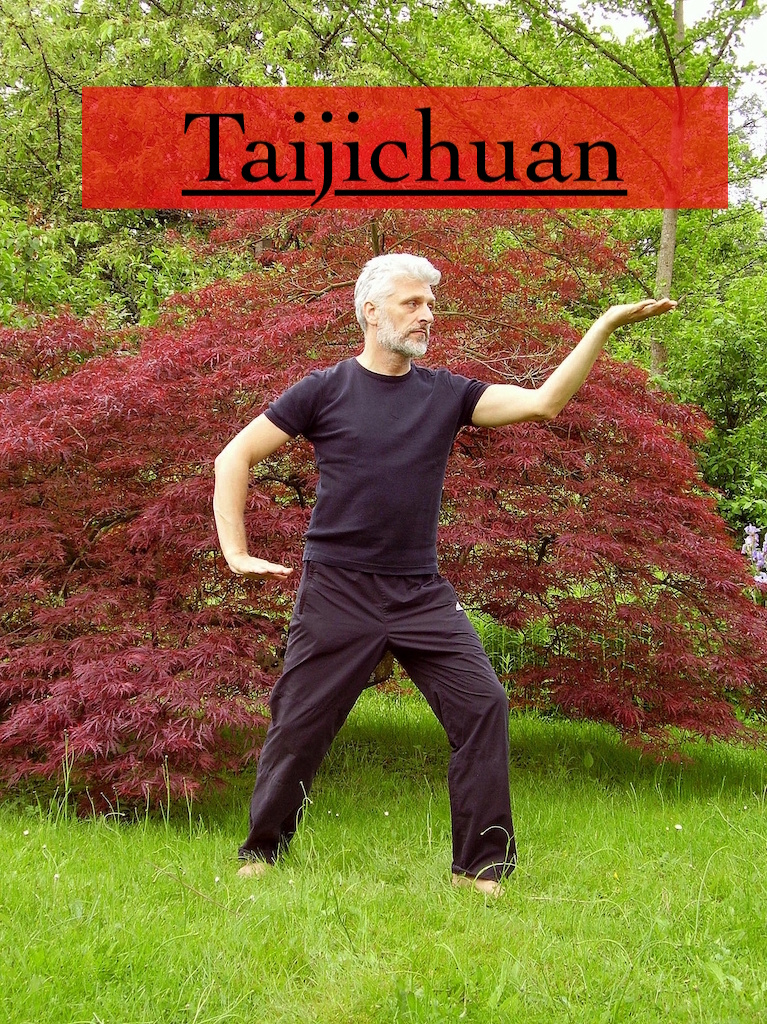
Taijiquan - The supreme ultimate martial art for health, meditation, and self-defense