
Volleyball (Sitting)
Paralympic Sport for All Abilities
What is Sitting Volleyball?
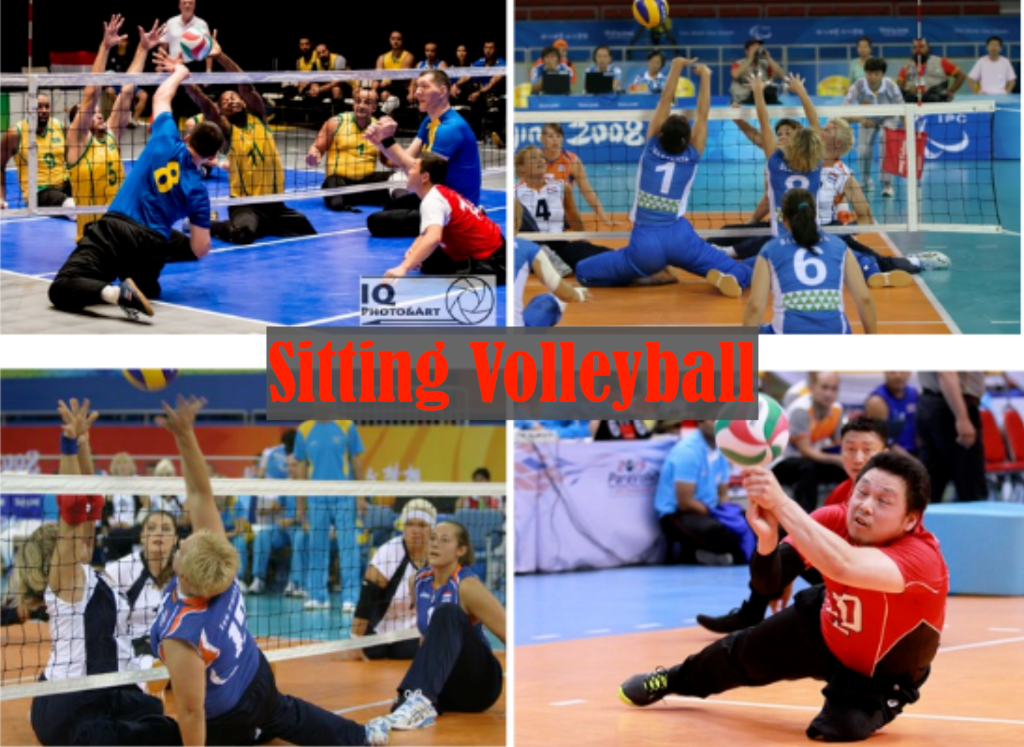
Sitting Volleyball is a form of volleyball for athletes with a disability, organized by World ParaVolley. As opposed to standing volleyball, sitting volleyball players must sit on the floor to play.
Originally a Paralympic sport, it has become popular as an inclusive activity that anyone can enjoy. The game builds empathy, core strength, and teamwork while being accessible to all abilities.
Source: Sports Without Limits - Sitting Volleyball Training Materials
Suitable For
Ages 8 and up, all abilities
Duration
1-2 hours per session
Team Size
6 players per team
Equipment
All provided
Sitting Volleyball vs. Traditional Volleyball
Sitting Volleyball
- • Women: 1.05 meters
- • Men: 1.15 meters
Traditional Volleyball
- • Women: 2.24 meters
- • Men: 2.43 meters
Court Specifications
Official Sitting Volleyball Court:
- • Playing Court: 6 meters × 10 meters
- • Attack Line: 2 meters from center line
- • Net Length: 6.50 to 7.00 meters
- • Net Width: 80 centimeters (0.80 meter)
- • Net Height (Women): 1.05 meters
- • Net Height (Men): 1.15 meters
- • Service Zone: Behind end line
- • Free Zone: Area outside the court
Understanding the Rules
Position Determination
The positions of the players are determined and controlled by the positions of their buttocks. This means the hand(s) and/or leg(s) may extend into the attack zone, on the court, or in the free zone outside the court.
Contact with Court Requirement
The player must have contact with the court with the part of the body from the shoulders to the buttocks at all times when playing the ball. To stand up, raise or take steps is forbidden.
Short Loss of Contact
A short loss of contact with the court is permitted when playing the ball, excluding the service, the block, and attack hit when the ball is completely higher than the top of the net.
Service Rule
At the moment the server hits the ball, they must be in the service zone and their buttocks must not touch the court (end line included).
Blocking Service
Unlike traditional volleyball, front-row players in sitting volleyball are allowed to block the service of the opponent.
Sitting & Movement Positions
Players develop specialized sitting positions and movement techniques to maintain court contact while effectively playing the ball. Key aspects include:
Base Position
Seated position with shoulders to buttocks in contact with the court, maintaining balance and readiness to move
Shuffling Movement
Using hands and arms to propel the body laterally while maintaining seated contact with the court
Diving Techniques
Extended diving positions to reach the ball while keeping shoulders-to-buttocks contact
Attack Position
Positioning for spike attempts while maintaining court contact with the lower body
Sitting Volleyball Actions
Players execute all standard volleyball actions from a seated position, including:
Serving
Executing serves from behind the end line while buttocks remain off the court surface
Passing (Bump)
Receiving and passing the ball using forearm platform while maintaining seated position
Setting
Using overhead finger technique to set up attack plays from seated position
Attacking (Spiking)
Striking the ball forcefully over the net while maintaining contact with shoulders to buttocks
Blocking
Deflecting opponent's attacks at the net, including blocking services (unique to sitting volleyball)
Digging
Defensive plays to keep the ball in play, often involving diving movements while maintaining contact
Sitting Volleyball - An inclusive Paralympic sport for all abilities